Soft Autumn color palette: 24 colors with hex codes
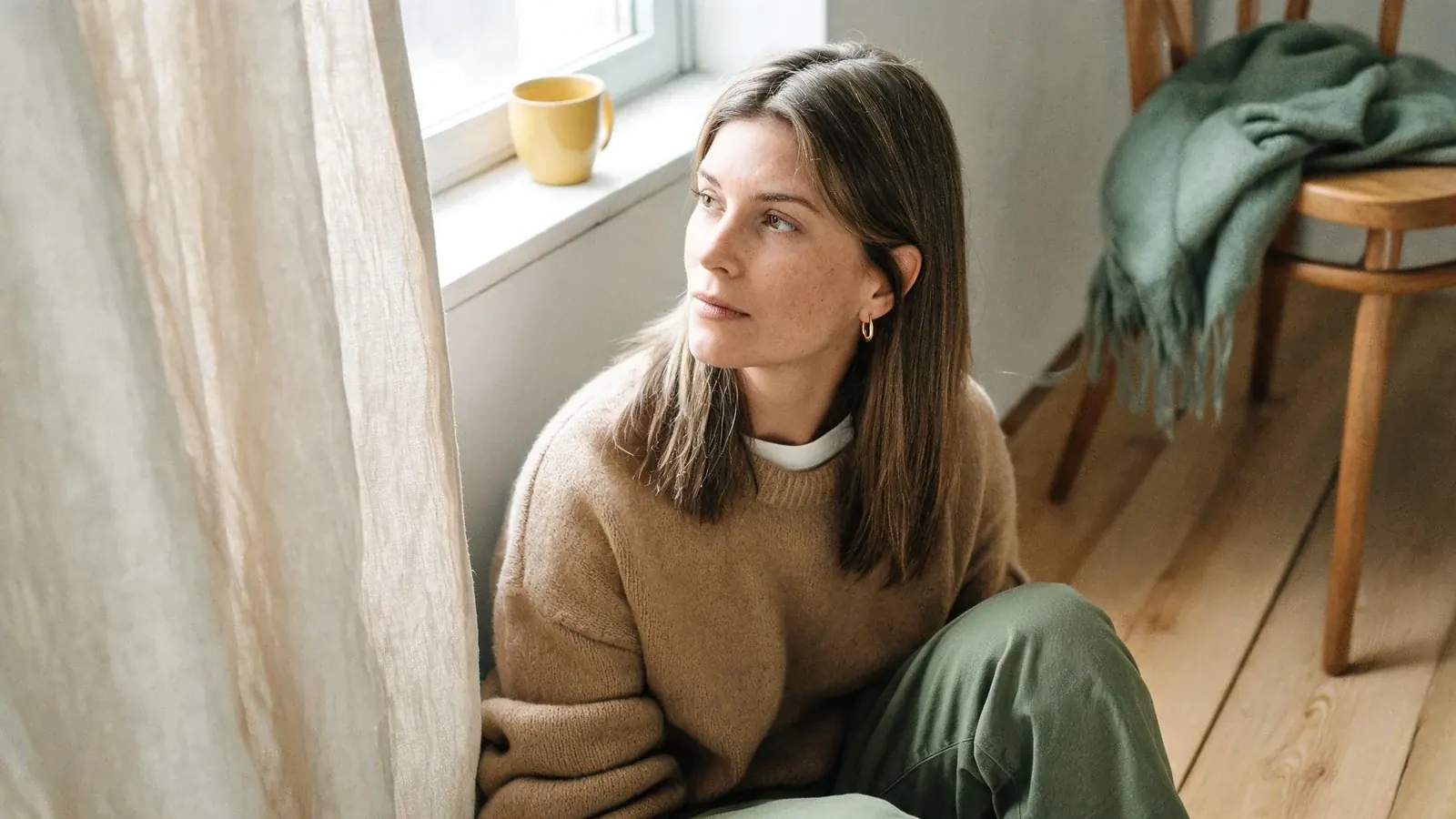
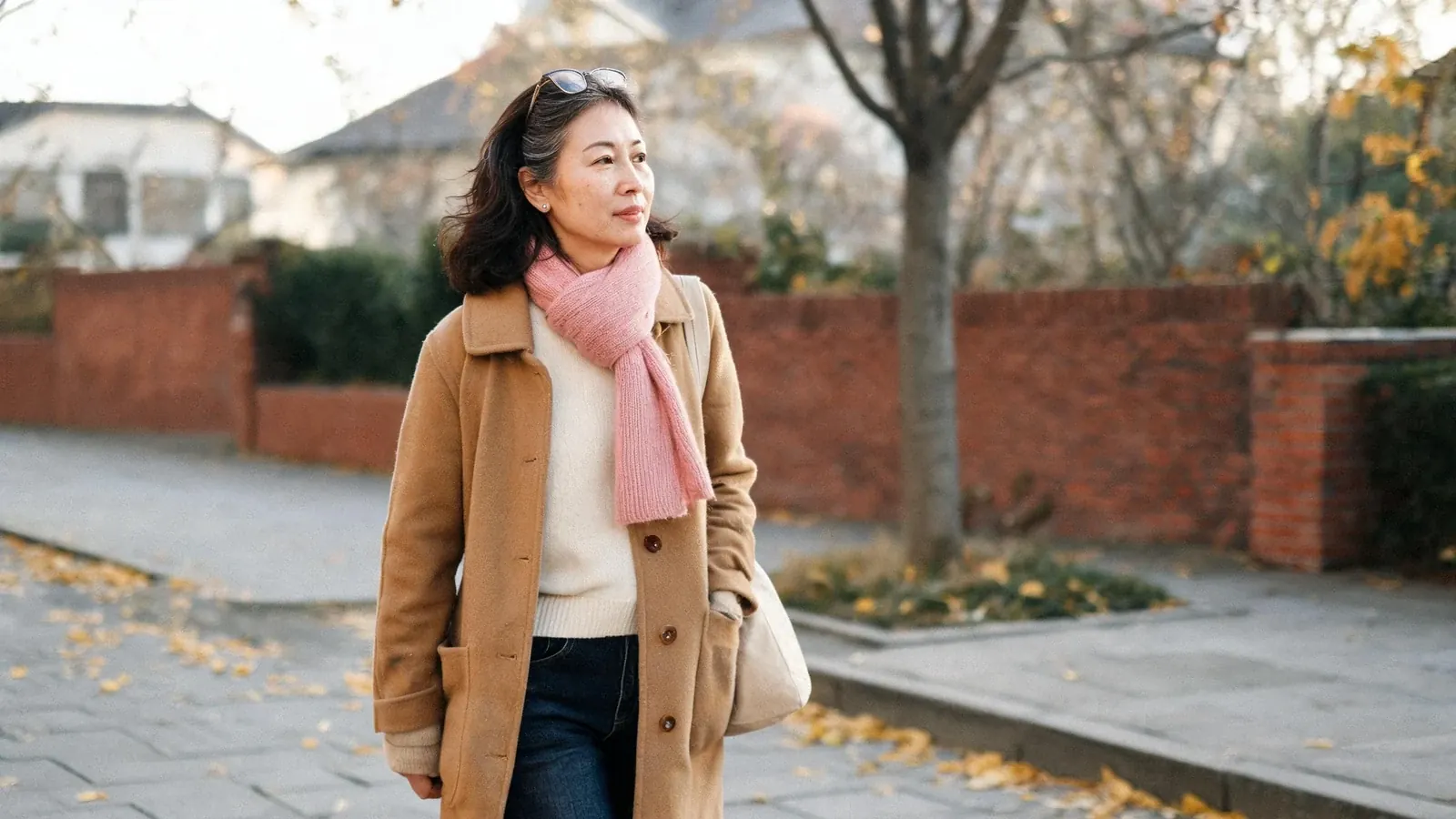
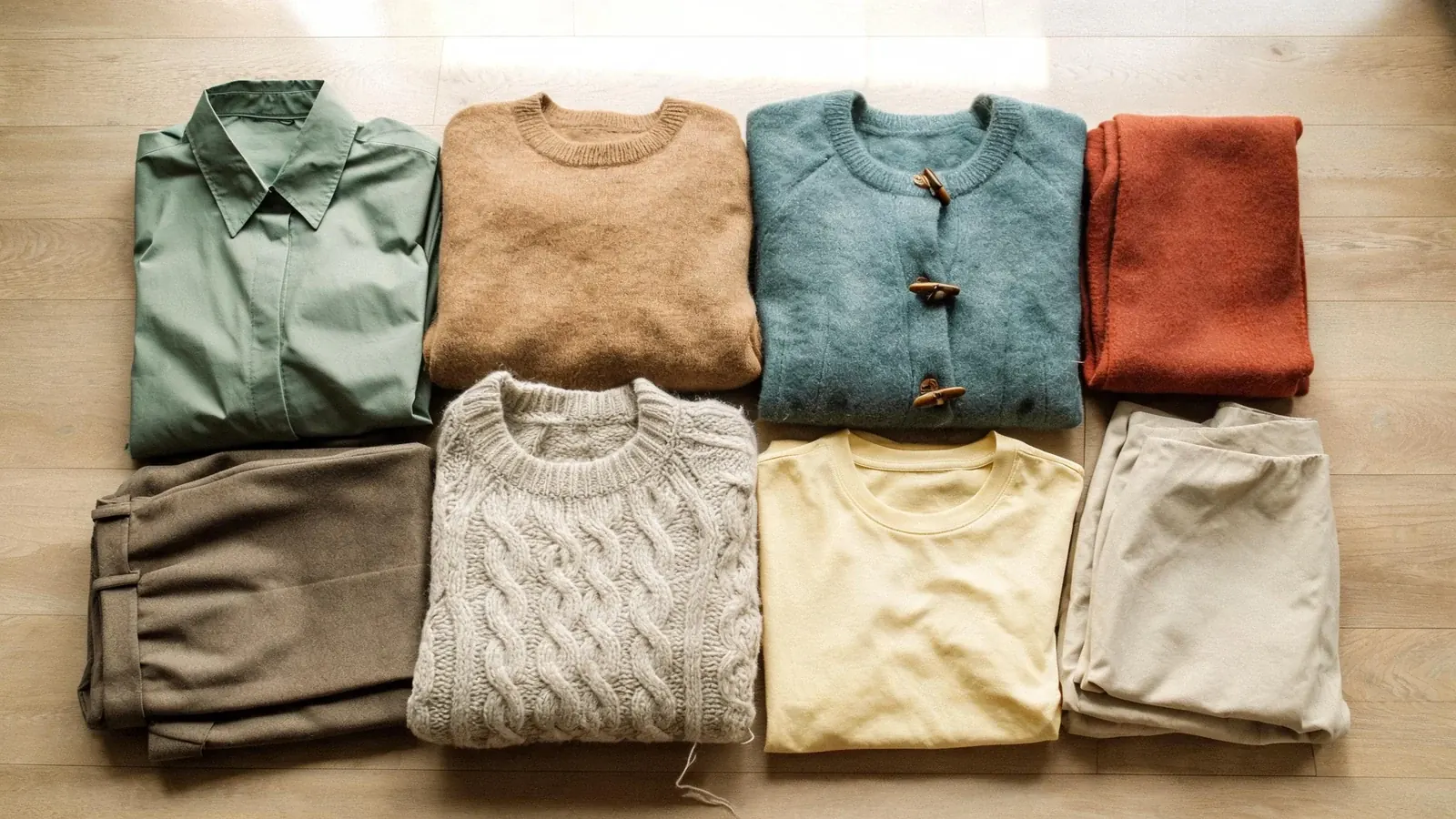
The Soft Autumn color palette is muted, warm and medium in depth: camel, oatmeal, warm taupe, sage, moss, olive, dusty teal, salmon, terracotta, soft rust, muted mustard and milk chocolate, each with a little gray mixed in. Cream takes the place of white, and coffee brown or warm charcoal takes the place of black.
The Soft Autumn rule: muted first, warm second
The 12-season system splits each of the four classic seasons into three and names each one after its strongest trait. Soft Autumn, also called Muted Autumn, is the Autumn whose strongest trait is softness. Warmth comes second and stays gentle, which puts it between True Autumn on one side and Soft Summer on the other. Depth is medium, so the palette has no near-black and no bright white.
That gives you three questions to ask of any piece of clothing, in this order:
- Is it muted? Dusty, heathered and a little grayed beats clean and bright.
- Does it lean warm? Gold, olive and brown undertones beat blue-gray and icy pink.
- Is it medium? Anything between cream and coffee brown beats optic white and black.
The order matters. A bright orange is warm and medium but fails the first question, and on a Soft Autumn it tends to look louder than the person wearing it. A dusty rose that leans slightly cool passes the first question and often works.
The Soft Autumn color palette, with hex codes
These 24 colors fall into seven groups. The hex codes help when you shop online, but no screen shows a fabric exactly, so check each new piece in daylight when it arrives.
| Group | Colors and hex codes | Wear them as |
|---|---|---|
| Light neutrals | Cream #EEE4CF, oatmeal #D8C9AE, sand #C9B597 | Tees, shirts and knits in place of white |
| Mid neutrals | Camel #B38B5D, warm taupe #9E8A76, mushroom #A89C8E | Coats, trousers, knitwear and bags |
| Dark neutrals | Milk chocolate #7A5A44, coffee brown #53413A, warm charcoal #55504A | Trousers, coats and boots in place of black |
| Greens | Sage #A4A98A, moss #7B7C4E, olive #6F6B45 | Shirts, knitwear, jackets and trousers |
| Blue-greens | Soft jade #7C9E8F, dusty teal #5E8784, slate teal #4E6468 | Knitwear and dresses; slate teal in place of navy |
| Pinks, reds and plum | Salmon #D0937E, dusty rose #BF8C82, marsala #8C5452, muted plum #7A5B62 | Blouses, knits and scarves worn near the face |
| Yellows and oranges | Butter #E4D3A3, peach #E0B394, muted mustard #BC9C5E, terracotta #B77A62, soft rust #A3654E | Knits, dresses and scarves |
Let the three neutral rows carry the big pieces, like the coat, trousers, shoes and bag, and wear the other four rows near your face, where color changes how your skin looks. Since every color in the table has the same softness, most pairs work. Easy ones to start with are olive and camel, dusty teal and warm taupe, terracotta and moss, and salmon and oatmeal.
What Soft Autumn wears instead of black, white and brights
If your closet is built on black, white, navy and gray, those are the four neutrals Soft Autumn finds hardest. You don't have to give them up. Move them away from your face, and when one wears out, replace it with its swap:
- Black: coffee brown, warm charcoal or olive. Even milk chocolate looks softer than black at the neckline.
- Optic white: cream, oatmeal or ecru, which read as white from across a room without the glare up close.
- Navy: slate teal, dusty teal, or a navy that's faded and a little gray. Dark, inky navy works better as trousers than as a sweater.
- Cool gray: warm taupe, mushroom or greige. Blue-gray is the one to skip.
- Denim: a mid wash with some fade. Very dark indigo and bright white denim add contrast your coloring doesn't have.
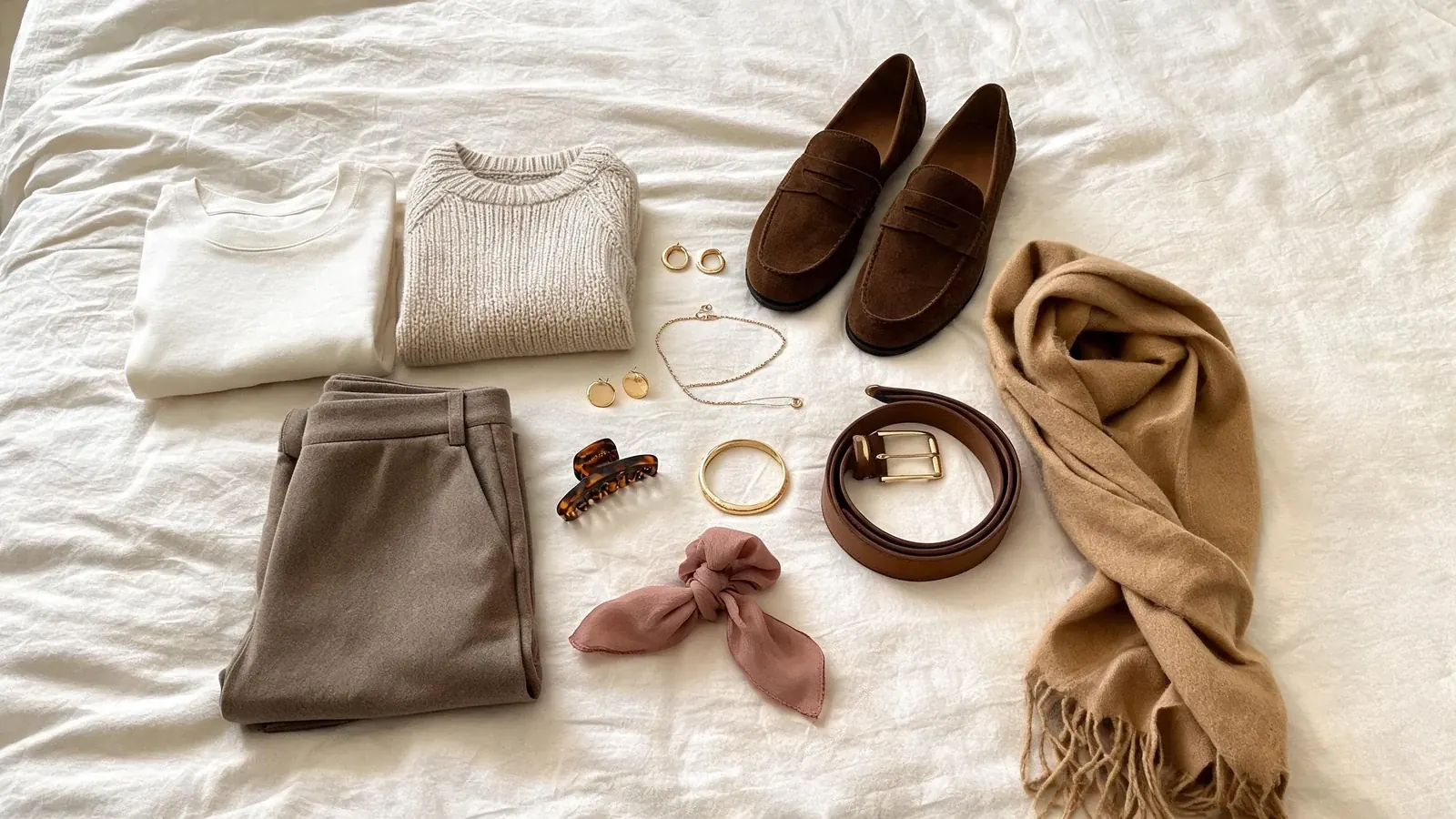
Metals follow the same logic. Soft Autumn is neutral-warm, so the finish matters more than the metal: brushed or antique gold, bronze, brass and rose gold sit best, and matte silver or pewter can work. What looks harsh is high polish, above all on bright silver. For shoes, belts and bags, mid brown, chocolate, taupe suede and olive leather all stay inside the palette.
The colors to keep away from your face are the clear, cool and very bright ones:
- black and optic white
- neons and saturated brights: hot pink, electric blue, kelly green, lemon yellow, fire-engine red
- icy pastels, such as baby blue and icy pink
- cool jewel tones: sapphire, royal purple, magenta, emerald
- blue-gray and silver-gray
In trousers, shoes and bags they matter much less, since the color closest to your face does most of the work.
How to tell if you're a Soft Autumn
No single feature decides it; the overall look does. These are the usual signs:
- Your hair, eyes and skin sit close together in depth. In a black-and-white photo of your face without makeup, you see mostly mid-grays, with no jump from very dark to very light.
- Your eyes are soft hazel, olive, green-brown or a soft brown, often with warm flecks.
- Your hair is dark blonde, light to medium brown with golden and ashy strands mixed, or a soft auburn. If you color it, honey, golden brown and soft auburn keep the look, while blue-black and platinum add contrast that isn't there.
- Your skin can be any depth, from fair to deep. What matters is that it looks even in muted colors and tired in bright ones.
To check, stand by a window in daylight with no makeup and your hair pulled back, and hold each pair of fabrics under your chin. Watch your skin, not the fabric:
- Optic white, then cream
- Black, then coffee brown
- Bright orange, then soft rust
- Cool gray, then warm taupe
- Polished silver, then brushed gold
If the second of each pair evens out your skin while the first makes shadows and redness stand out, you're probably a Soft Autumn or one of its neighbors. Here is how to tell them apart:
- Soft Summer is just as muted but cool, so gray, rose-beige, slate blue and silver suit it better than camel, olive and gold. The Concept Wardrobe's Soft Autumn guide suggests holding something gray to your face in daylight: if your eyes look grayish, you're likely a Soft Summer, and if they stay green, hazel or olive, you lean Soft Autumn.
- True Autumn is warmer and richer. If full-strength pumpkin, mustard and rust look good on you rather than heavy, you're more likely a True Autumn.
- Deep Autumn is darker, with more contrast. If dark chocolate, forest green and deep teal look right and the light neutrals in the table wash you out, look at Deep Autumn.
If you're still between two seasons, gussy's color analysis reads a photo of your face, which stays on your phone, and places you in one of the same 12 seasons.
How to find the Soft Autumn colors already in your closet
Camel, olive, taupe and oatmeal are ordinary colors, so your closet may already hold part of the palette. Find it before you buy anything:
- Pull out everything you wear near your face: tops, shirts, knitwear, dresses, jackets, coats and scarves. Trousers, skirts and shoes matter much less.
- Sort them in daylight into three piles: in the palette, close to it, and off it. Close means too dark, too crisp or too cool, like a black turtleneck or a navy sweater; off means bright, icy or neon.
- Count the first pile against the whole. The color reading in gussy does this count for you and shows what share of the pieces you wear near your face is off your palette.
- Keep the close pile working by putting a palette color between it and your face: a camel scarf over a black coat, or a cream shirt collar over a navy sweater.
- Note what's missing before you shop. Check first for a light neutral top in cream or oatmeal and for one palette color to wear near your face.
Say your closet has a camel coat, olive chinos, a black blazer, a navy sweater, a white shirt and a gray hoodie. The coat and chinos are already in the palette. The blazer and sweater are close, and a cream shirt or a camel scarf at the neck makes them work. The white shirt and the hoodie can stay until they wear out, then be replaced in cream and warm taupe. The first thing to buy is one oatmeal or sage top, which makes the blazer, the sweater and the coat easier to wear.
For outfits, one formula covers most days: a mid or dark neutral below, a light neutral at the neck and one palette color between them.
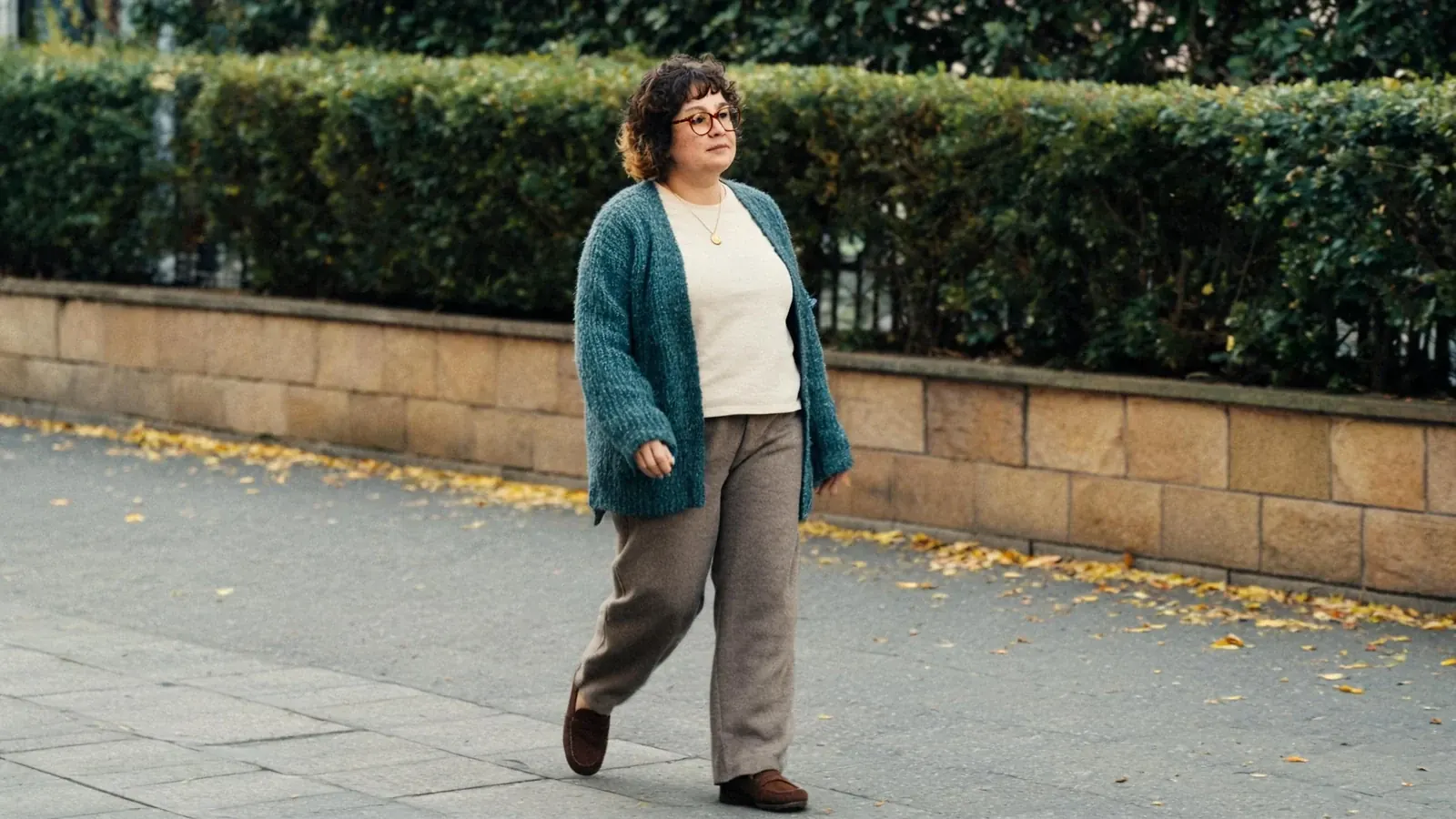
- Warm taupe trousers, an oatmeal tee and a dusty teal cardigan
- Milk chocolate trousers, a cream shirt and a salmon sweater
- Coffee brown trousers, a cream tee and a moss green jacket
Keep the steps between light and dark small. Soft Autumn looks best in tonal, blended outfits, and a white top over black trousers is the combination that works against it most.
Frequently asked questions
Is Soft Autumn warm or cool?
Warm, but only just. It's the softest and least warm of the three Autumns and sits close to neutral, so being muted matters more for Soft Autumn than being warm.
Can Soft Autumn wear black?
Not easily near the face, where black tends to look harsh and deepen shadows. Wear it in trousers, shoes and bags, or swap it for coffee brown, warm charcoal or olive.
What colors should Soft Autumn avoid?
Bright, clear and icy colors: black, optic white, neons, hot pink, electric blue, kelly green, icy pastels and cool jewel tones like sapphire and magenta. They matter most near the face.
Is Soft Autumn gold or silver?
Mostly gold, in a soft finish: brushed or antique gold, bronze, brass and rose gold. Matte silver and pewter can work too, while bright, polished silver is usually the hardest to wear.
Am I a Soft Autumn or a Soft Summer?
Both are muted and low in contrast, so the difference is warmth. If camel, olive, cream and gold look better on you than gray, rose-beige, slate blue and silver, you're more likely a Soft Autumn.
What hair color should a Soft Autumn have?
Natural Soft Autumn hair is often dark blonde, light to medium brown with golden and ashy strands, or soft auburn. If you dye it, honey, golden brown and soft auburn keep the look, while blue-black and platinum add harsh contrast.