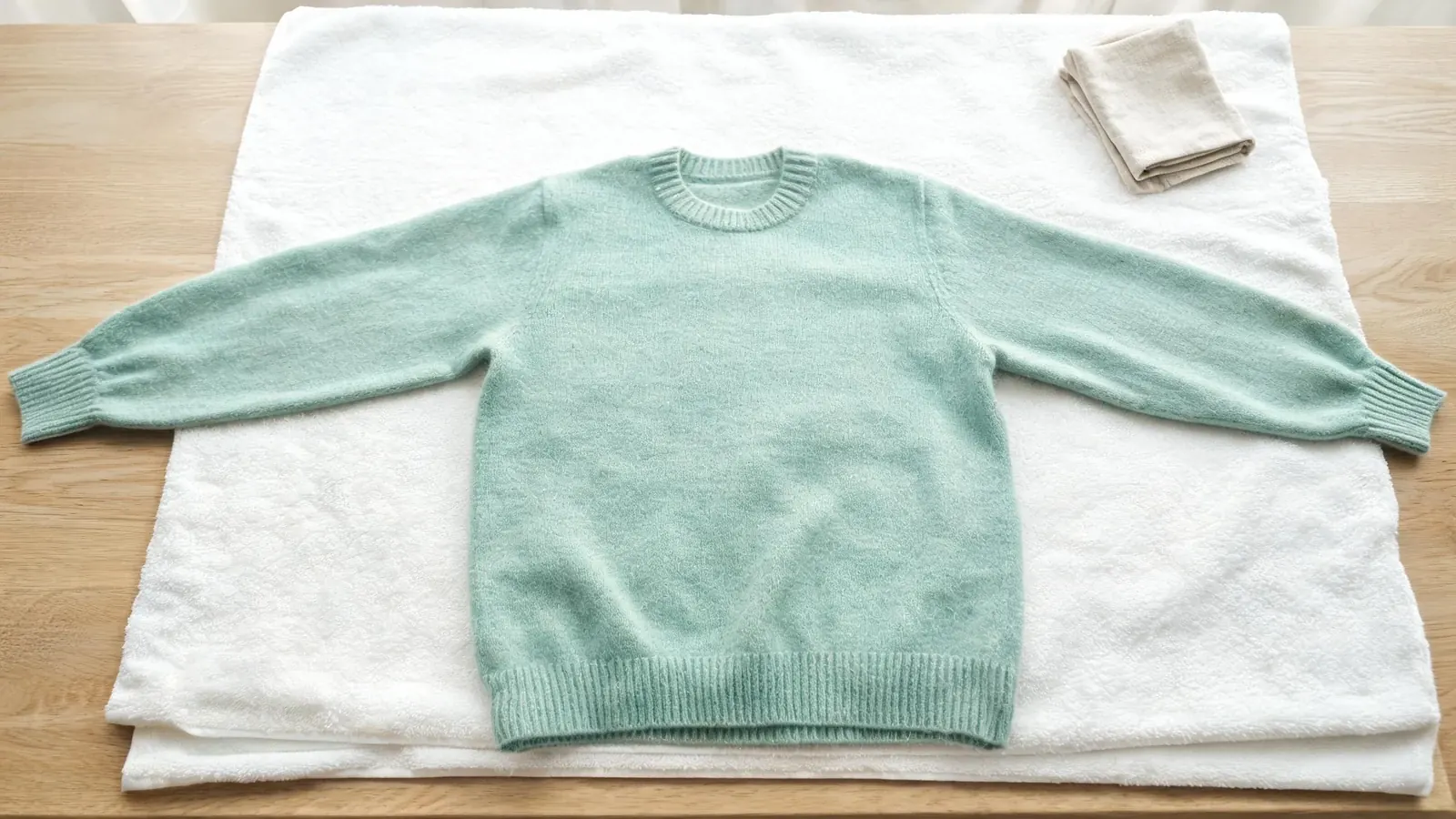
How to remove pilling from sweaters, fabric by fabric

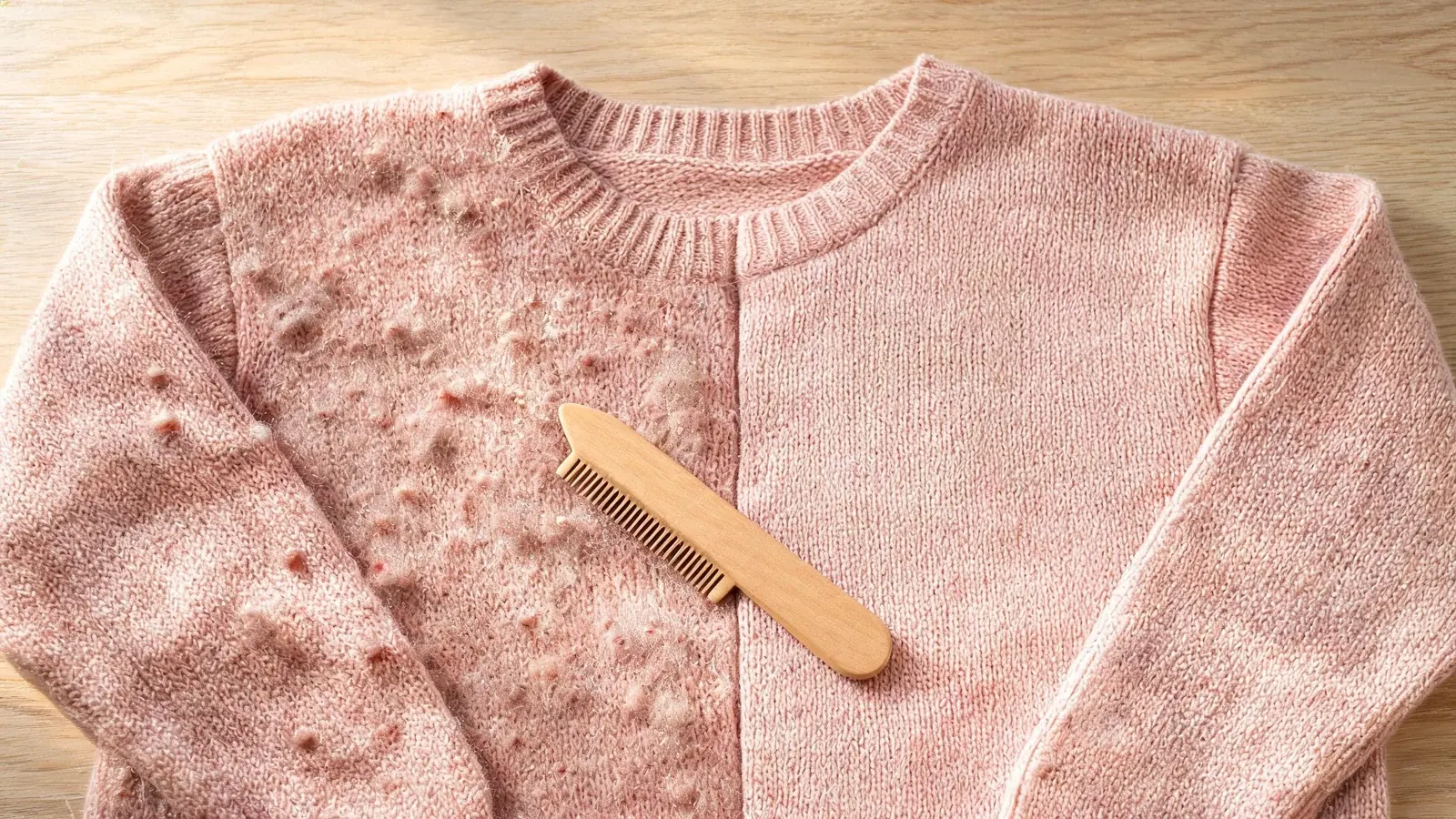
To remove pilling from a sweater, lay it flat on a table and pick the tool by fiber: a comb for cashmere, a comb or a light-handed fabric shaver for wool, a fabric shaver for cotton and synthetic blends, and tape or a lint roller for loose fuzz. Then cut down the rubbing that made the pills, in the wash, in the dryer and while you wear it.
Match the tool to the fiber
A pill is a small knot of fibers that worked loose from the yarn and tangled together. How hard it clings decides the tool. Wikipedia's entry on pilling explains the difference: wool fibers are weak enough that their pills eventually break away, while acrylic, polyester and nylon are strong enough to keep their pills on the surface. In a blend, the strong fiber holds on to the pills the weaker one makes.
| Fabric | Use | Go easy with |
|---|---|---|
| Merino and lambswool | A sweater comb, very gently, or a fabric shaver with light pressure; a few pills come off by hand | Pressing down, which thins the knit |
| Cashmere | A pill comb | Shavers and stones on thin, fine knits |
| Cotton knits and sweatshirts | A fabric shaver; a lint roller for light fuzz | Elbows that are already worn thin |
| Acrylic, polyester, nylon and their blends | A fabric shaver; a disposable razor on a smooth, tight knit | Tape, which lifts only loose fuzz |
| Mohair, bouclé and loose, fluffy knits | Small scissors, one pill at a time | Shavers and combs, which catch the loops |
Whatever the tool, every pill you take off is fiber that used to be part of the sweater, so each session leaves the knit a little thinner. Light pressure, and de-pilling when the pills start to bother you rather than on a schedule, keep a sweater going longer.
How to use a fabric shaver, a sweater comb or tape
Work on a flat, hard surface with the sweater dry. Woolmark's pilling guide suggests removing pills routinely once a sweater has dried after a wash, or just before ironing, and says a few pills can simply be picked off by hand.
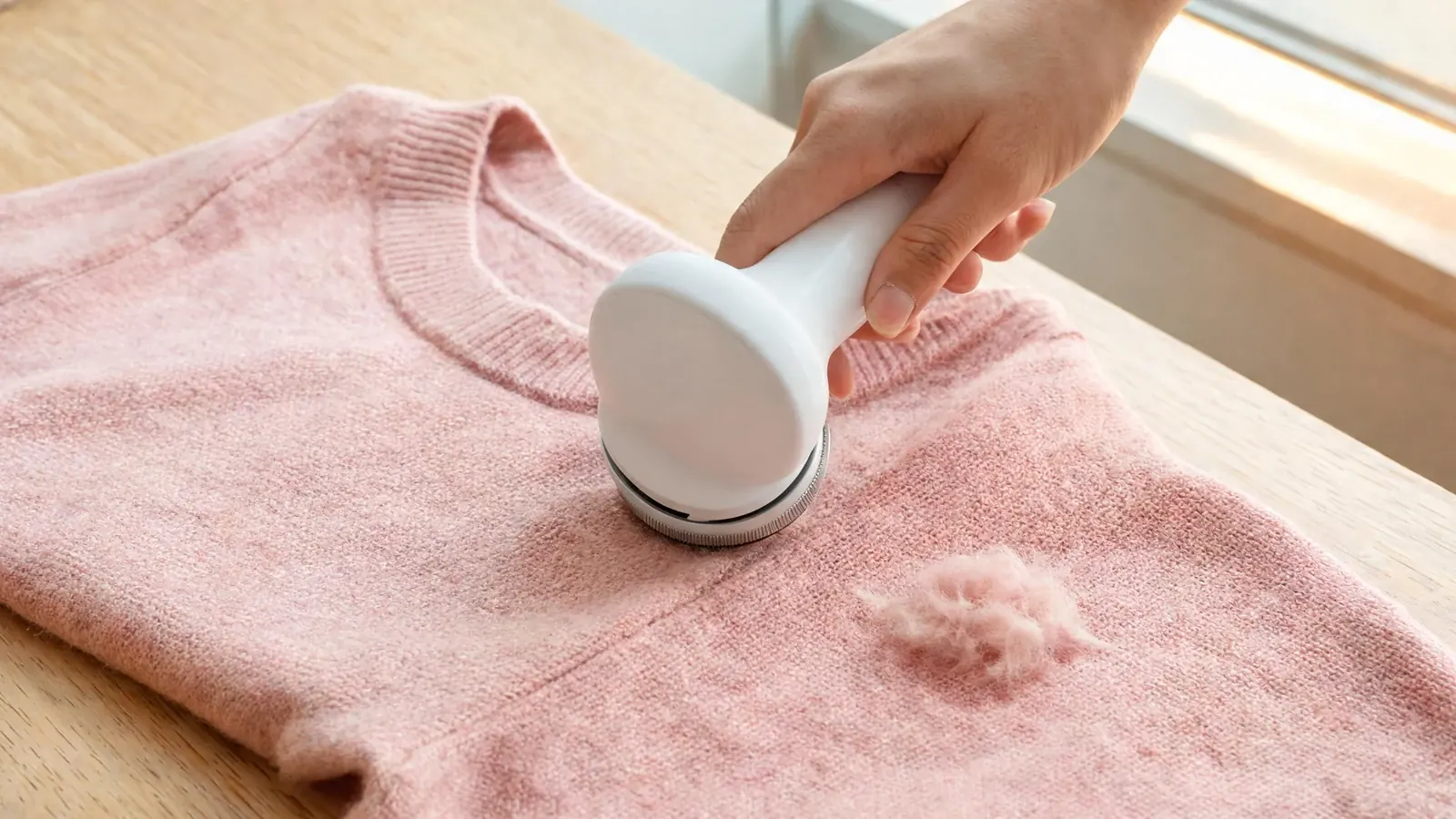
Fabric shaver
Woolmark calls these small battery-powered de-pillers low cost and very effective.
- Lay the sweater flat and smooth, and stretch the patch you're working on slightly with your free hand so the pills stand up.
- Hold the head flat against the knit and glide it in small circles with almost no pressure. The blades should catch the pills, not dig into the fabric.
- Empty the lint catcher whenever it fills.
- Work around seams, buttons and the edges of the ribbing, and stop once the surface is smooth.
Sweater comb
Hold the fabric flat with one hand and draw the comb across it in short strokes in one direction, clearing the teeth as fuzz builds up. The same guide's advice is to comb very gently and carefully. For cashmere, the Cashmere and Camel Hair Manufacturers Institute points to pill combs. A sweater stone, a pumice block you brush over the knit, is rougher than a comb; keep it for thick, sturdy knits.
Tape, a razor or scissors
Wrap packing tape around your hand, sticky side out, then press and lift. Tape and lint rollers pick up loose fuzz and pills that barely hang on; anchored pills stay put.
A disposable razor works on a smooth, tight knit, such as a cotton or acrylic sweater laid flat on a table: short, light, downward strokes, as if shaving. Skip it on fine wool, cashmere and textured knits, where one slip can cut a hole.
On mohair, bouclé or a loose knit, snip the biggest pills off at their base with small scissors, one at a time. Don't pull them, or you'll drag a loop out with them.
Why sweaters pill at the underarms and sides
Pilling comes from rubbing while you wear the sweater. Woolmark lists the usual spots as the elbows, armpits, sleeves, belly and sides, where the arms keep brushing against the body of the sweater. It also names what makes pilling more likely: a wearer who moves a lot, and anything the sweater rubs against for hours, such as a desk you sit at all day. A bag strap on the same shoulder every day does the same to that patch.
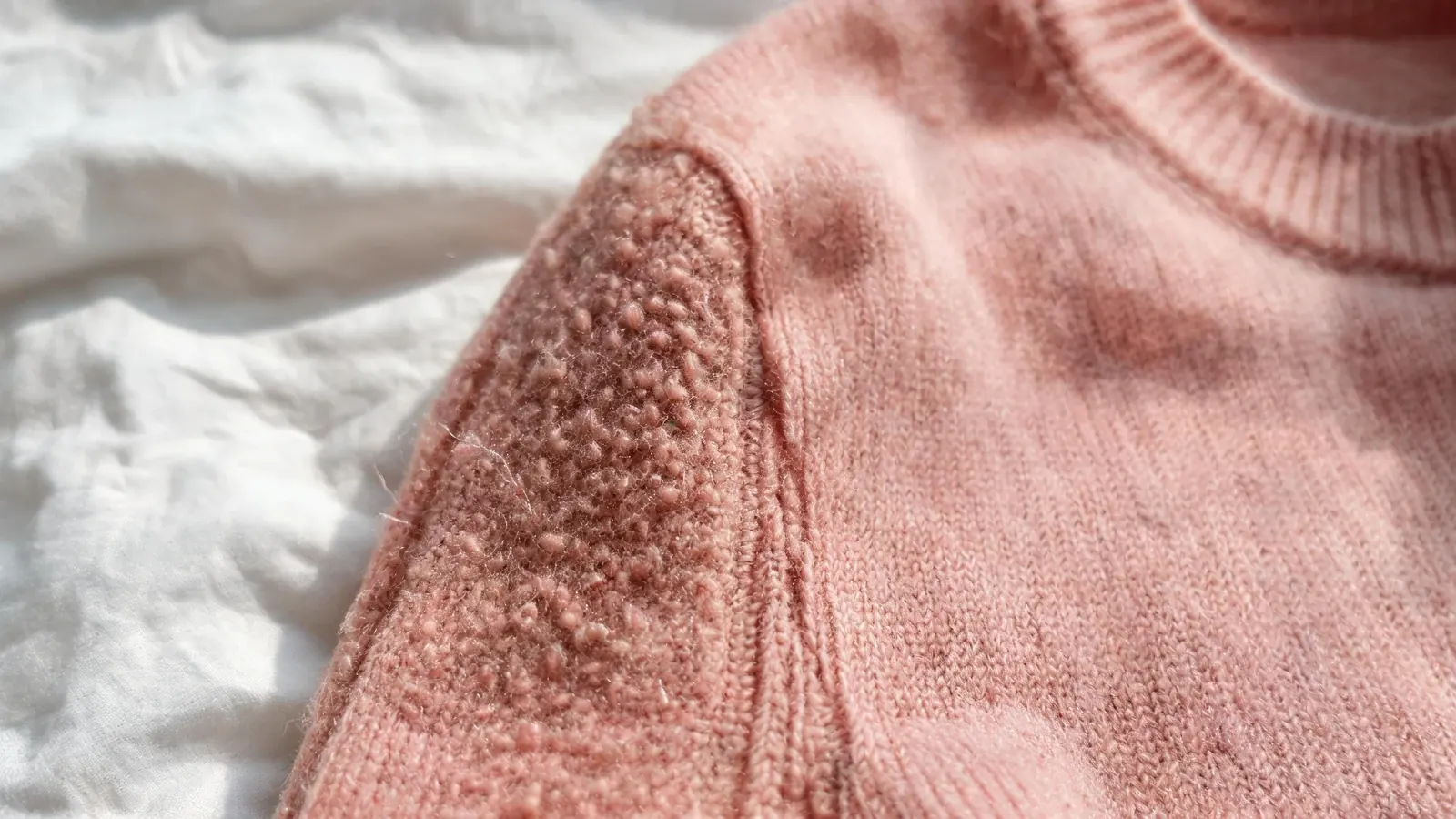
A new sweater that pills in its first few wears is shedding loose fibers from the surface of its yarn. Clear them once and watch what happens next. On wool, the loose fibers run out and pilling usually slows down. On synthetic fibers and blends, pills keep building up, because the strong fibers hold them in place.
How to stop a sweater pilling in the wash and dryer
No sweater is pill-proof, and Woolmark says nobody can guarantee pilling won't happen. You can still cut the rubbing a sweater gets in the laundry:
- Turn it inside out before it goes in the wash, so the outside isn't the side that rubs.
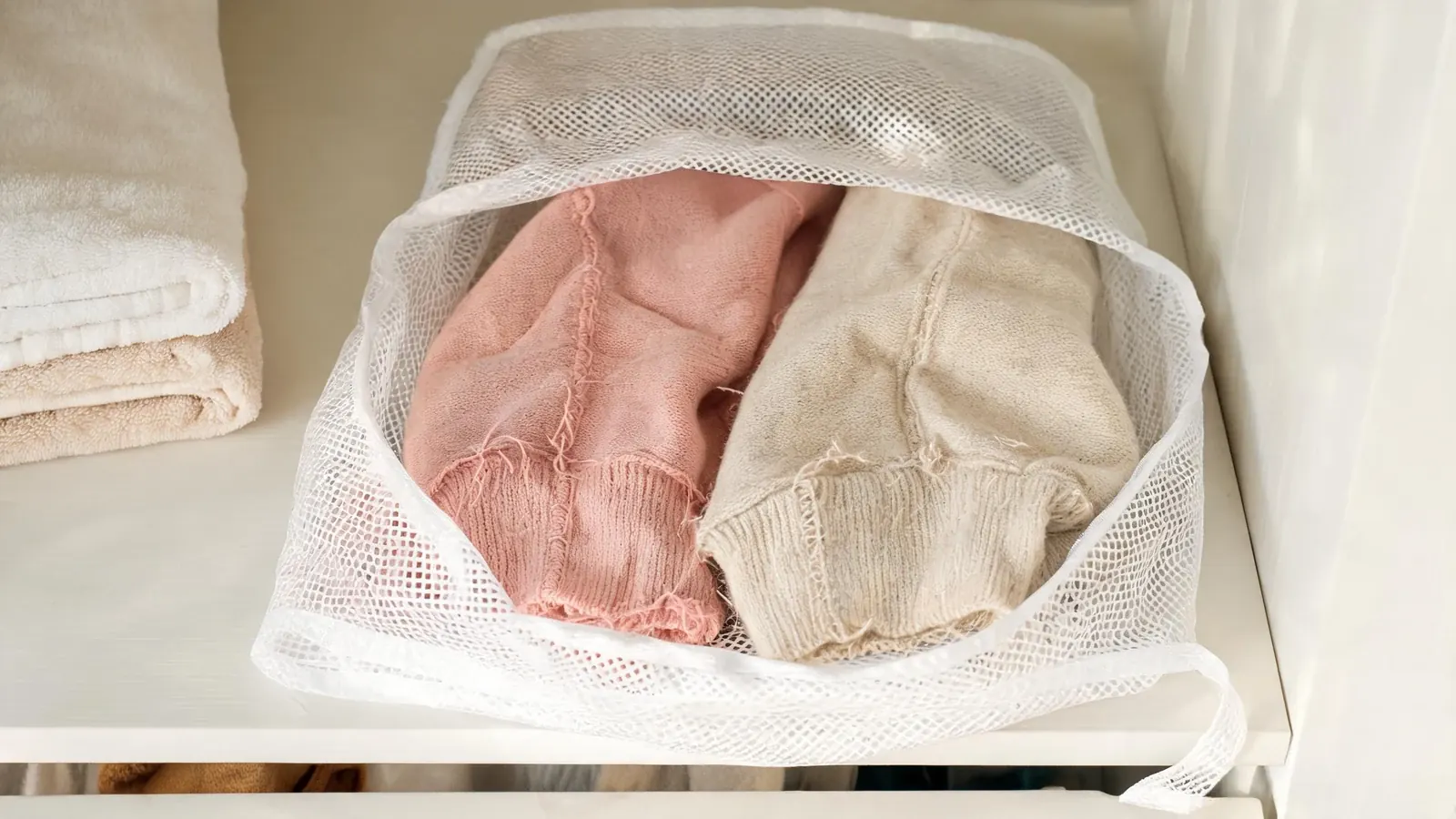
- Wash it by hand, or on the wool or delicates cycle inside a mesh laundry bag.
- Keep the drum no more than a third full, the limit Woolmark's care-symbol guide gives for machine-washable wool.
- Leave towels, jeans and anything with zippers or hook-and-loop tape out of the load; they're rougher than a knit.
- Skip fabric softener, or use very little. Woolmark's detergent guide explains that softener acts as a lubricant that lets fibers move out onto the surface, so too much of it leads to pills in later washes.
- Dry it flat. A dryer tumbles the sweater against the drum and the rest of the load for the whole cycle, and wool shouldn't go in at all unless its label says tumble dry.
- Wash it less. Airing a sweater between wears spares it a round of rubbing, and how to wash a wool sweater has the airing and washing steps.
The pilling guide's last tip is for the hours you wear it: cut the rubbing where you can. Moving your bag to the other shoulder now and then spreads the wear instead of pilling one patch.
What pilling says about a sweater, and when to stop fixing it
Pilling alone doesn't mean a sweater is badly made, since every knit pills a little where it rubs. How fast the pills come back tells you more. Woolmark's advice to designers who want less pilling is longer fibers, yarn with as much twist as it can take and denser fabric, and you can check the last two in a shop:
- Hold it up to the light. A dense knit lets little light through.
- Feel the yarn. Smooth, tightly twisted yarn holds its fibers in better than soft, loosely spun yarn.
- Read the fiber tag. In a blend with acrylic, polyester or nylon, the strong fiber holds on to the pills the softer one makes.
The Cashmere and Camel Hair Manufacturers Institute says the same of cashmere: high-quality garments are normally less prone to pilling.
Say two sweaters pill in their first month, a merino crewneck and a soft acrylic-blend cardigan, and you de-pill both. The merino one pills less after each session as its loose fibers run out. The cardigan grows a new crop soon after every shave, because its strong fibers hold its pills in place. The first is settling in; the second will keep asking for the shaver, and each session thins it a little more.
If you mark what you wear in gussy, each piece keeps a wear count ("Worn 12 times"), so you'll know whether a sweater started pilling after a handful of wears or a whole winter. Cost per wear turns that count into what each wear really cost you.
Stop de-pilling when the knit looks thin or see-through at the elbows or underarms. A pill is fiber that was part of the fabric, so a spot that keeps pilling keeps getting thinner, and that's where holes start. From there, the sweater needs mending, not another shave.
Frequently asked questions
Does pilling mean bad quality?
Not on its own, since every knit pills a little where it rubs. Pills that come back fast after every removal point to short fibers, loosely twisted yarn or an open knit, the things Woolmark tells designers to avoid.
Why is my sweater pilling after one wear?
A new knit sheds loose fibers from the surface of its yarn, and the first wears rub them into pills at the underarms and sides. Remove them once; if they keep coming back just as fast, it's the yarn.
Is a sweater comb or a fabric shaver better?
A comb is gentler and suits cashmere and fine wool; a shaver is faster and suits cotton and synthetic blends. Woolmark calls battery fabric shavers very effective on wool too; just keep the pressure light.
Can you use a razor to remove pilling?
Yes, on a smooth, tight knit laid flat on a table, with short, light strokes. Skip it on fine wool, cashmere and textured or loose knits, where one slip can cut a hole.
Does wool ever stop pilling?
Often, yes. Wool fibers are weak enough that pills break away and the loose surface fibers run out, so a wool sweater usually pills less over time. Synthetic fibers hold on to their pills much longer.
How do you stop a sweater from pilling?
Cut the rubbing: wash it inside out, by hand or on a wool or delicates cycle in a mesh bag, skip fabric softener and the dryer, and air it between wears instead of washing it every time.