How to organize your closet without buying anything
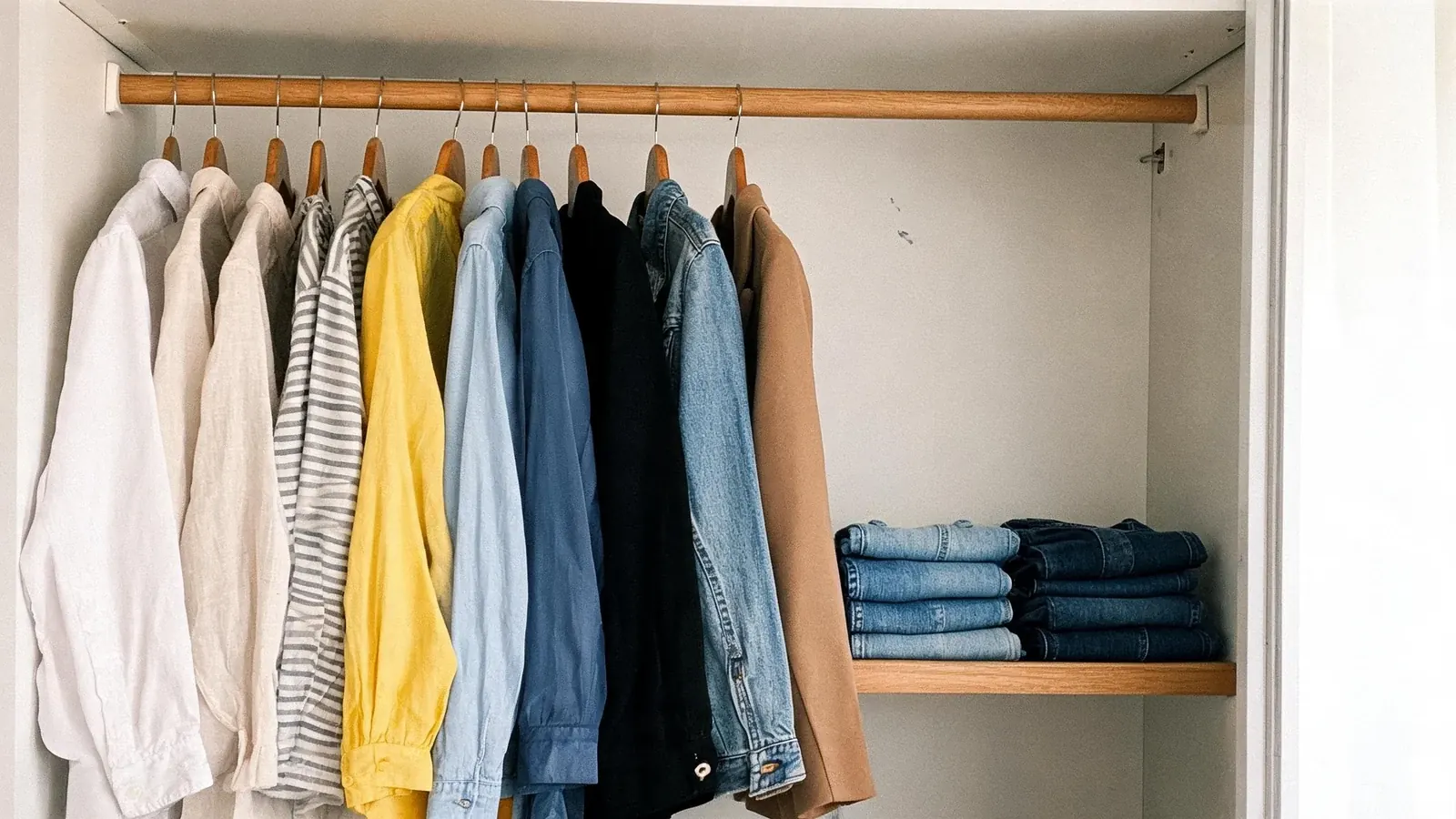
Organize your closet by how often you wear things: what you reach for every week goes between eye level and hip height, closest to the door; occasional pieces go higher or further back; off-season clothes go into the boxes and suitcases you already own. Start by taking everything out and keeping only what you wear. Inside each section, group by type and then by color, fold what stretches and hang what creases, and you won't need a single new bin or hanger.
The rule: what you wear most goes where you reach first
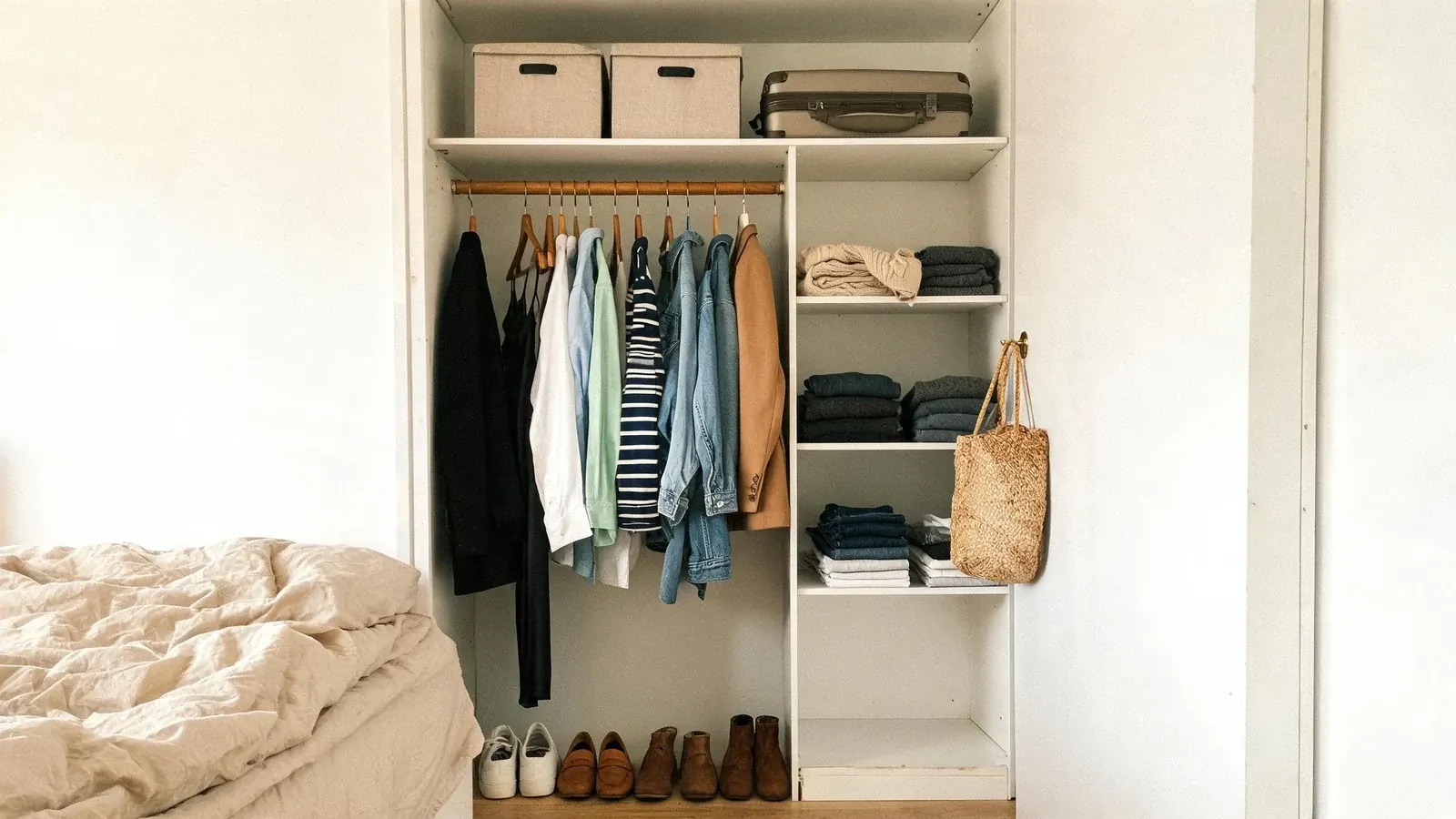
A closet usually fills up in the order things came home, so a coat you wore twice can end up in front of the jeans you wear every week. Organizing by wear turns that around. The best spot in any closet is the one you can reach without bending, stretching or moving anything first, and that's where the clothes you wear most belong:
- Between eye level and hip height, nearest the door: what you wear every week, like your jeans, everyday tops, work trousers and this season's jacket.
- Higher up, at the far ends of the rod and at the back of deep shelves: what you wear a few times a month or less, such as a suit, dressy shirts and going-out clothes.
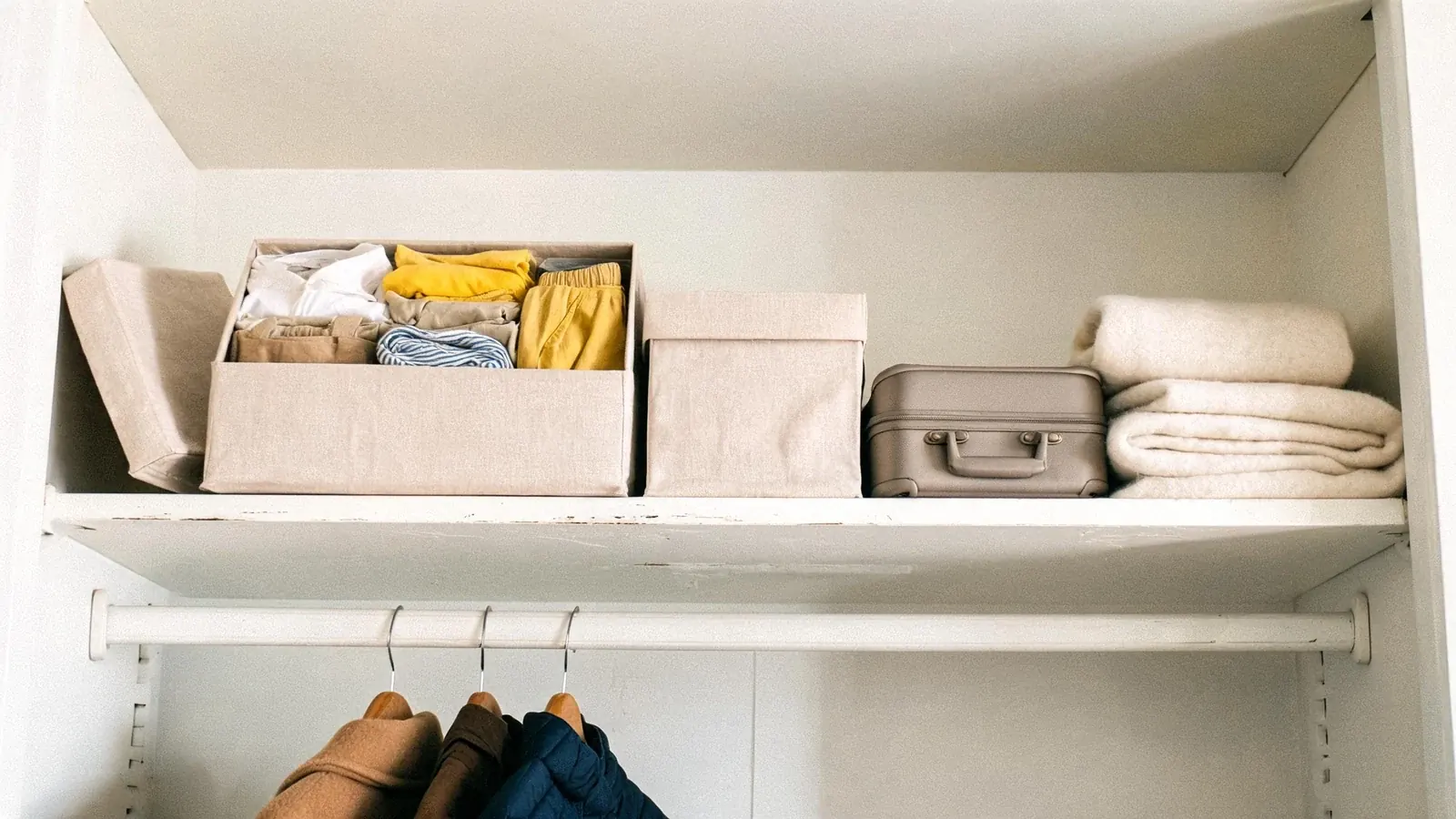
- On the top shelf or under the bed: the off-season, packed into boxes or suitcases, and a box of pieces you're not sure about yet.
- On the floor: shoes, with the pairs you wear most at the front.
Say you wear the same dark jeans three times a week and a navy suit twice a year. The jeans go on the shelf at chest height by the door, and the suit moves to the far end of the rod, where you won't push past it every morning and where it'll be waiting for the next wedding.
If you're not sure what you wear most, turn every hanger the wrong way round, and when you wear something, hang it back the normal way. After a month or two, the hangers still turned around are the clothes you skip. If you mark what you wear in gussy, the closet can be sorted by Most worn, which is your eye-level list, and by Forgotten, which puts what you've never worn or haven't worn in three months at the top. The same counts are what you need to work out cost per wear.
How to organize your closet, step by step
- Take everything out and lay it on the bed by type: tops, bottoms, dresses, jackets, knits. In a big closet, do one type at a time so you're not left with a mountain at bedtime.
- While the closet is empty, wipe the shelves and look at what you're working with: how high the rod and shelves sit, how deep they are and which side you open first, since that decides where each zone goes.
- Sort each piece into one of four piles: wear often, wear sometimes, off-season and go. Go is anything that doesn't fit, needs a repair you won't make, or stayed unworn through a full year of seasons.
- Put the pieces you can't decide on into one box, write today's date on it and put it on the top shelf. If you haven't opened it in three months, donate it without looking inside.
- Put things back in pile order: wear-often into the eye-level zone first, wear-sometimes around it, off-season into storage.
- Inside each zone, group by type, then by sleeve length, then by color: all the shirts together, short sleeves before long, and each group running from light to dark.
Type comes before color because that's how you get dressed: you look for trousers, then choose which pair. Color within each type still helps, since three navy sweaters side by side make it obvious you don't need a fourth. A closet sorted by color alone looks good in photos, but it puts a navy blazer next to a navy T-shirt, and you're back to searching.
For the color order, light to dark is the easiest to keep: white, cream and beige, then gray, then the colors, then navy, brown and black. Rainbow order with the neutrals at either end works too, as long as you stick to one.
Fold or hang: fold what stretches, hang what creases
A hanger slowly pulls stretchy fabric out of shape, and a drawer presses creases into woven fabric, so one rule settles most of the closet:
| Piece | Fold or hang | Why |
|---|---|---|
| Sweaters, cardigans, knit dresses | Fold | A hanger stretches knits and leaves bumps at the shoulders |
| T-shirts, tanks, sweatshirts | Fold, or stand upright in a drawer | Jersey creases lightly and folds small, which leaves the rod free |
| Jeans | Either | Denim barely creases: fold them on a shelf, or hang them if the rod has room |
| Shirts and blouses | Hang, with the top button done up | Cotton, linen and silk crease in a drawer, and the button keeps the collar in shape |
| Dresses and skirts | Hang, except knits | Woven fabric creases when folded, and knit fabric stretches on a hanger |
| Tailored trousers | Hang, folded along the crease over the bar | The pressed crease stays sharp |
| Blazers, suits, coats | Hang on your widest, sturdiest hangers | Wide hanger shoulders keep the jacket's shoulders in shape |
| Gym clothes, pajamas, loungewear | Fold or roll, in a drawer or a box | Stretchy fabric that never needs pressing |
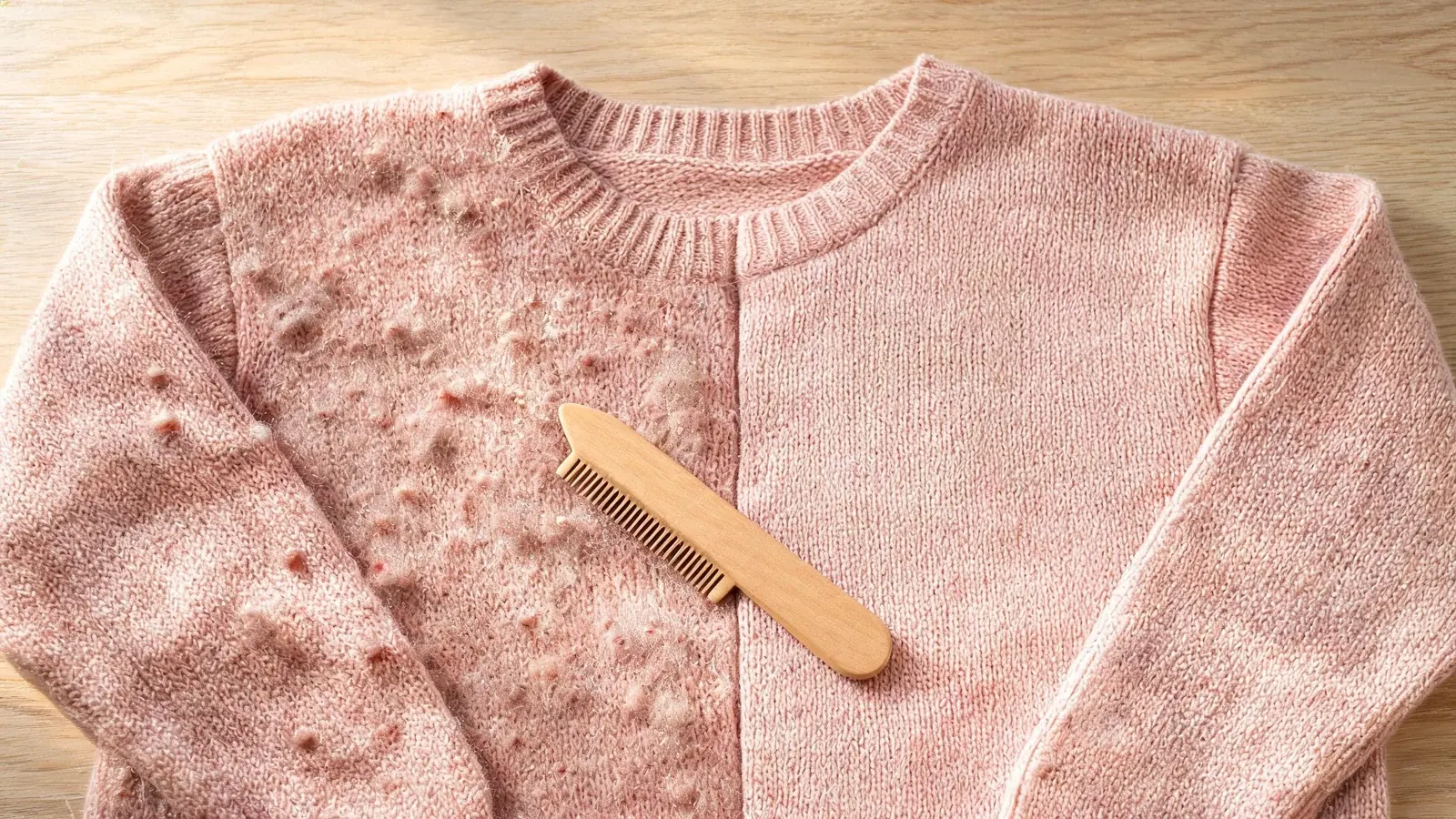
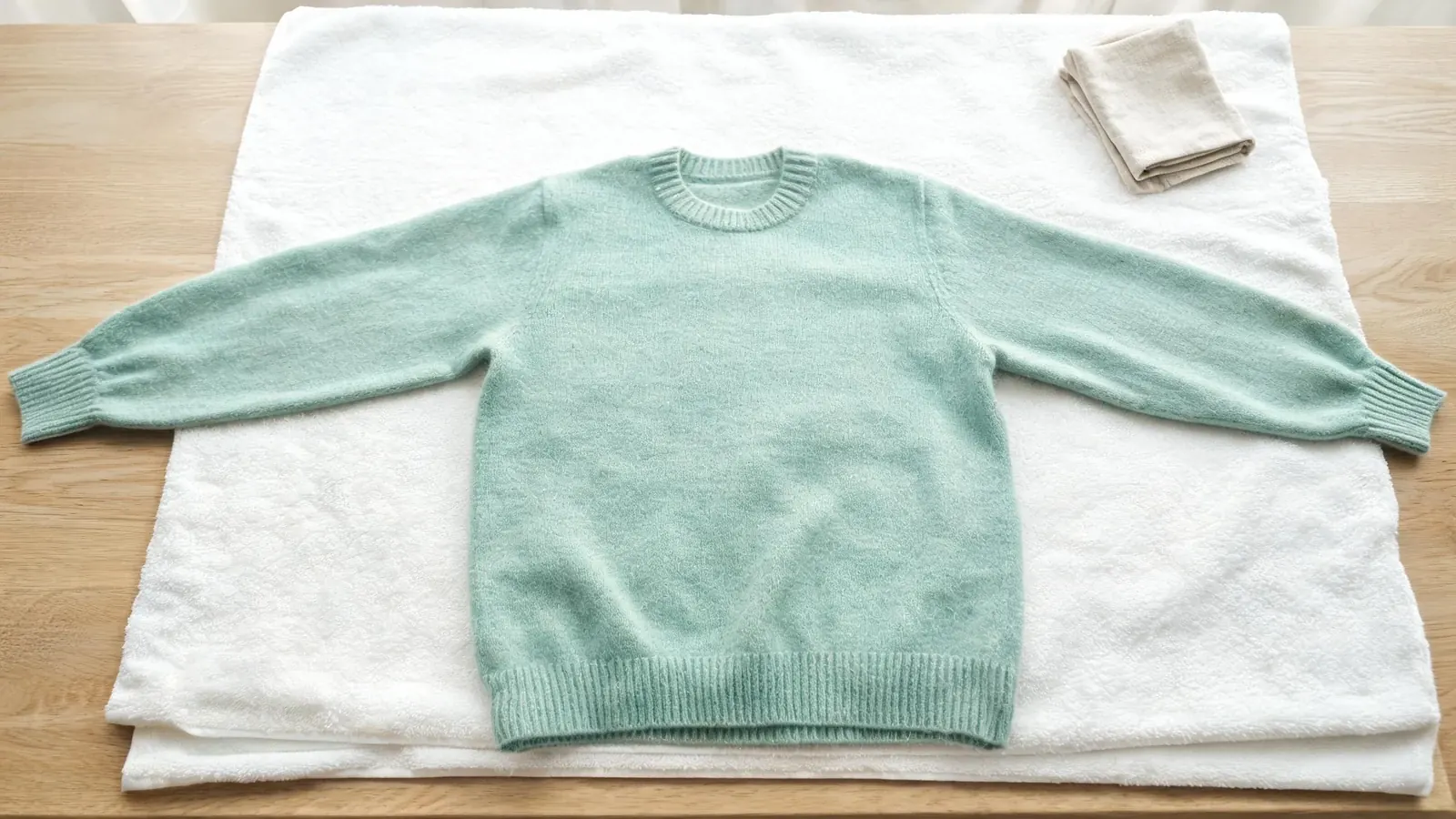
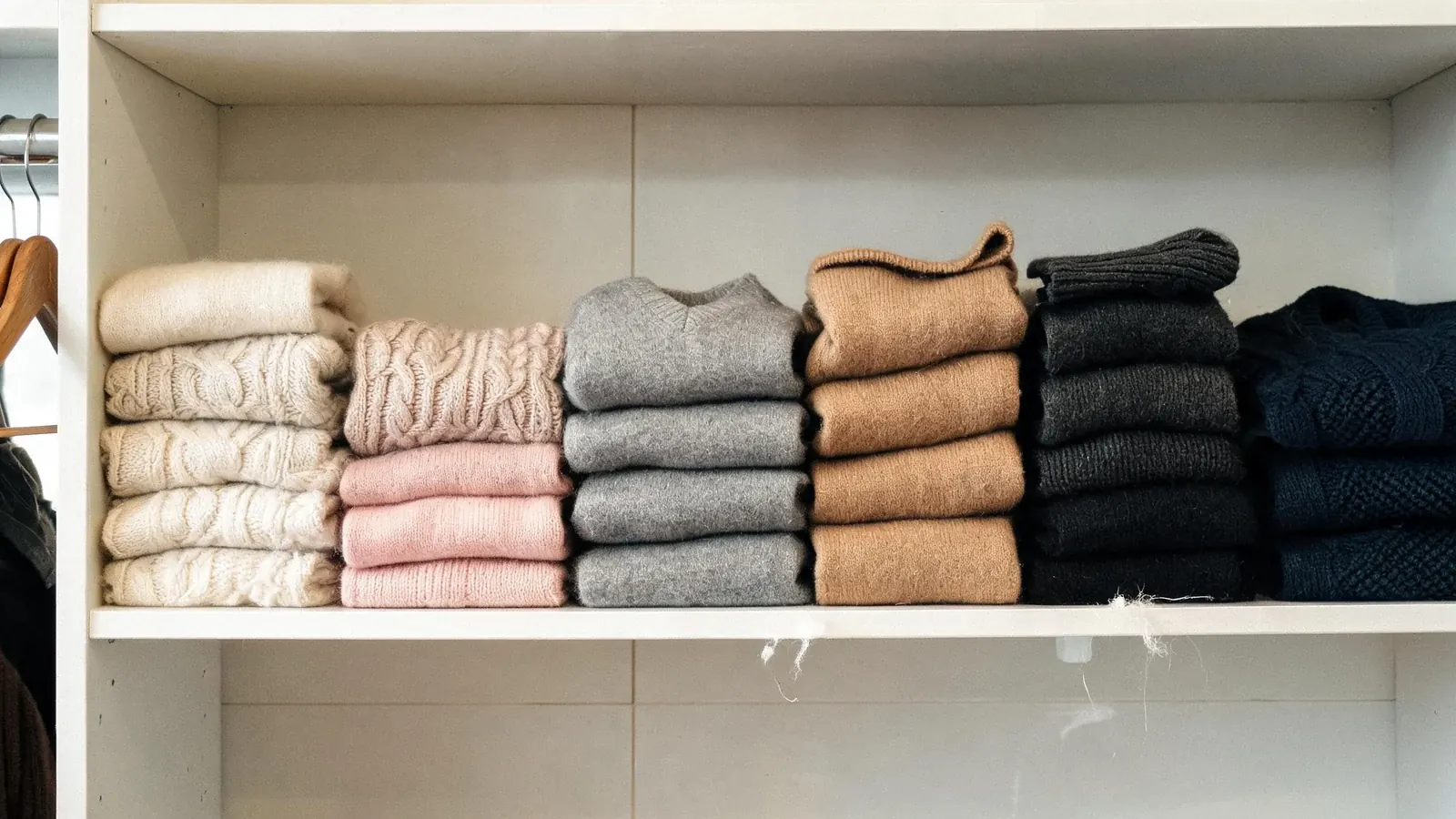
Knitwear is the one to get right. Woolmark's guide to storing wool says to fold rather than hang, so garments keep their shape. Keep the stacks low, four or five sweaters at most, so the bottom one comes out without toppling the rest.
If there's no shelf space for sweaters, fold one in half lengthwise, lay it over a hanger with the hook in the armpit, then drape the body over one arm of the hanger and the sleeves over the other. The weight hangs from the middle instead of the shoulders, so it doesn't stretch.
How to organize a small closet without buying anything
In a small closet, every inch you can reach has to hold something you wear. These fixes use what's already in your home:
- Clear out what isn't clothing. Empty shopping bags, gift wrap and the box from something you bought last year all take space from clothes.
- Hang the short pieces together at one end: shirts, jackets, skirts and trousers folded over the bar. The space under them fits a stack of folded jeans, a laundry basket or two rows of shoes, while dresses and coats hang at the other end.
- File-fold T-shirts, gym clothes and pajamas: fold each into a small rectangle and stand it on its edge in the drawer, like files in a cabinet. You see every piece at once, and taking one out doesn't wreck the pile.
- Put outfits you always wear together on one hanger, such as a suit's jacket and trousers, or a shirt under the blazer you wear it with.
- Use shoeboxes as bins on the shelves for belts, scarves, socks and swimwear. A lid cut into strips makes a drawer divider.
- Pack off-season clothes into your suitcases. They take the same space empty or full, so fill them and put them on the top shelf or under the bed.
- Keep a bag for donations on the closet floor. When something doesn't fit, or you've taken it off twice before leaving the house, it goes straight in.
If it's still too full after all that, the fix is in the edit, not in storage: go back to step 3 with whatever is hanging at the back of the rod.
How to keep your closet organized
Give clothes you've worn once, but aren't ready to wash, a spot of their own: one hook, or the last few inches of the rod. Otherwise they end up on a chair, and the chair turns into a second closet.
- Put away what you wore that evening. Two minutes at night keeps the pile from starting.
- One in, one out: when a new piece comes home, one of the same type leaves. The closet stays the same size, and you notice before you buy a fifth white shirt.
- Switch seasons when the weather turns, not on a date. Going to the storage box twice in one week for a sweater is a good sign it's time.
- Edit at every switch. Anything that stayed at the back all season goes into the maybe box or the donation bag.
Before anything goes into storage, wash it or have it dry-cleaned. Purdue University's extension entomologists say to never store soiled garments, because sweat and food stains favor moth development, and that almost any box or bag will do as long as it closes tightly enough to keep adult moths out. For delicate pieces, Woolmark suggests cotton or wool bags because they let clothes breathe, and a clean cotton pillowcase is a cotton bag you already own.
Frequently asked questions
Should you organize your closet by color or by type?
By type first, then by color within each type. You get dressed by type, looking for a top or trousers, and the color order shows you what you already have and keeps each section easy to scan.
What color order should I organize my closet in?
Light to dark is the easiest to keep: white, cream and beige, then gray, then the colors, then navy, brown and black. Rainbow order with the neutrals at the ends also works if you stick to it.
Should sweaters be folded or hung?
Folded. A hanger stretches knits and leaves bumps at the shoulders, and Woolmark advises folding wool rather than hanging it. If you have no shelf room, fold the sweater over the hanger from the armpit instead.
What should go on the top shelf of a closet?
What you use least: off-season clothes in boxes or suitcases, bags you carry a few times a year and the box of pieces you're unsure about. Keep anything you wear weekly lower, within easy reach.
How do you organize a small closet with lots of clothes?
Edit first, then give the easy-reach zone to what you wear weekly. Fold knits and T-shirts, hang short pieces together to free the floor below them, and pack the off-season into suitcases on the top shelf.
How often should you clean out your closet?
Twice a year, at each season switch, since you're handling every piece anyway. In between, the one-in-one-out rule and a donation bag on the closet floor keep it from filling up again.